35 Contronym Words (Opposite Meanings) + Free Flash Cards
Published:
October 17, 2025

Contributor:
Charis King
Disclosure: This post may contain affiliate links, meaning if you decide to make a purchase via my links, I may earn a commission at no additional cost to you. See my disclosure for more info.
Have you ever stumbled across a word that seems to mean two completely opposite things? That tricky word is called a contronym. In the English language, contronyms are fascinating because they have different meanings depending on how they’re used. They’re a fun way to teach kids about context, nuance, and even how some words have their own antonyms built right in.
Contronyms are part of our everyday language, from directions like “left” (he left the room vs. she left it behind) to words like “dust” (remove dust vs. sprinkle with it). By learning these words, kids can expand vocabulary, improve reading comprehension, and even get a little boost in spelling and writing.

What Is a Contronym?
A contronym is a single word with contradictory meanings depending on how it’s used. You might also hear it called a Janus word, named after the ancient Roman god of beginnings, Janus, who looked in opposite directions – just like these English words are their own opposites.
Many contronyms come from different etymologies, or two different origins, that eventually merged into one spelling over time. For example, cleave traces back to both Old English, clēofan (to split), and a different Old English word, clifian (to stick together). These words can be tricky, even for a native English speaker. They can also be fun because kids can explore the contrary meanings as the see how the context of a sentence can reveal the first or second meaning.
Our English language is definitely a mashup built from centuries of change and creativity!
35 Contronym Examples for Kids to Learn
To help your kids see how context changes meaning, here’s a list of words that mean opposite things in different situations. Each one is an example of a contronym you might run into in books, movies or even an everyday conversation.
1. Apology
- A statement of regret or remorse: He offered an apology for spilling the juice on the floor.
- A defense or justification of an action or belief: Her apology explained why she was late to the meeting.
2. Bolt
- To secure tightly in place: She bolted the door before leaving for school.
- To break free and run away: The horse bolted from the barn when it heard a loud noise.
3. Bound
- Heading to a destination: The train was bound for Chicago.
- Restricted from moving: His hands were bound with rope during the magic trick.
4. Buckle
- To connect: She buckled her seatbelt before the car started.
- To break or collapse: The bridge buckled under the heavy weight of the truck.
5. Cleave
- To split apart: He cleaved the log with an axe.
- To stick closely together: The puppy cleaved to its owner during the thunderstorm.
6. Clip
- To attach or fasten: He clipped the papers together for the report.
- To cut off: She clipped the coupon from the newspaper.
7. Consult
- To seek advice: She consulted the doctor about her cough.
- To give advice: The doctor consulted with her patient about treatment options.
8. Continue
- To keep doing an action: She will continue studying after dinner.
- To pause or suspend temporarily: The class will continue after the holiday break.
9. Custom
- A common practice: Shaking hands is a common custom in many countries.
- A special treatment: The hotel provided custom services for VIP guests.
10. Dust
- To remove dust: She dusted the shelves before guests arrived.
- To sprinkle lightly: He dusted the cake with powdered sugar.
11. Fast
- Quick or moving rapidly: The rabbit ran fast across the field.
- Securely fixed or not moving: The door is fast and will not open without the key.
12. Fine
- Excellent or high quality: That was a fine meal.
- Barely acceptable or just enough: Her handwriting was fine, but it could be neater.
13. Garnish
- To add to or decorate: They garnished the cake with colorful sprinkles.
- To take away, usually with wages: The court may garnish his paycheck for unpaid bills.
14. Give out
- To provide or distribute: The teacher gave out pencils to all the students.
- To stop because of a lack of supply or exhaustion: After running for hours, his energy finally gave out.
15. Handicap
- A disadvantage or obstacle: The storm was a serious handicap to their progress.
- An advantage in scoring: He had a golf handicap so he could play fairly against more experienced players.
16. Hold up
- To support or lift: The columns hold up the roof.
- To obstruct or delay: Traffic was held up by an accident.
17. Left
- Departed or gone: She left the party early.
- Remaining behind: There are only two cookies left on the plate.
Print & Go: Free Contronym Words Flash Cards
Turn tricky vocabulary into a fun learning game with this set of free flash cards
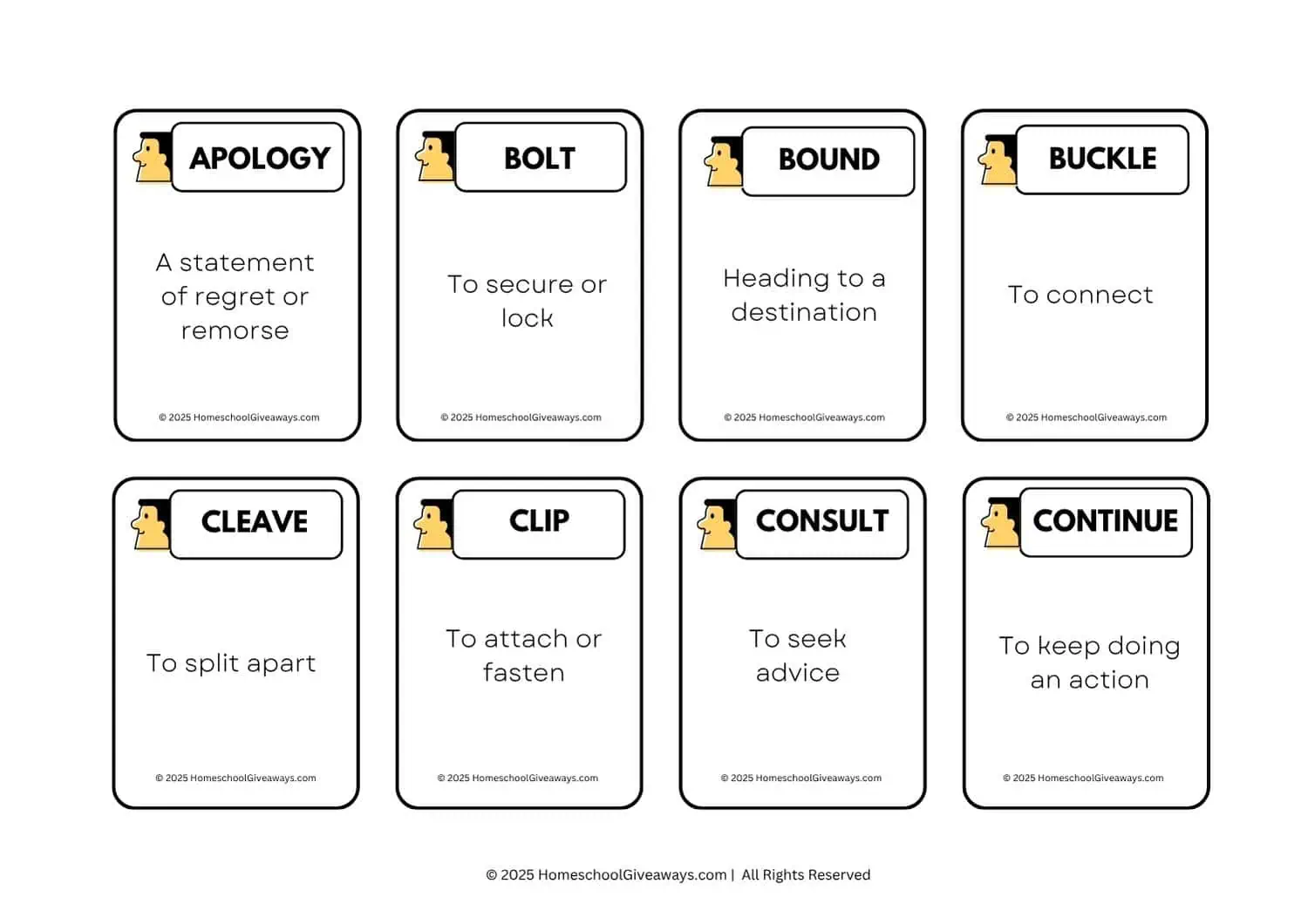
These printable cards feature 35 words that mean their own opposite. Each pair includes opposite meanings with cute Janus-inspired faces looking left and right to show how words can “face both directions.”
Use them as flashcards, play a round of memory match, or try a Go Fish variation where players collect all three matching cards before laying them down. You’ll even find a few blank cards to add your own contronym discoveries.
Just print, cut, and learn – no prep needed. These cards are a great way to boost vocabulary, critical thinking, and a love for language in one engaging activity.
More Vocabulary Practice Made Easy
Vocabulary Resource Pack
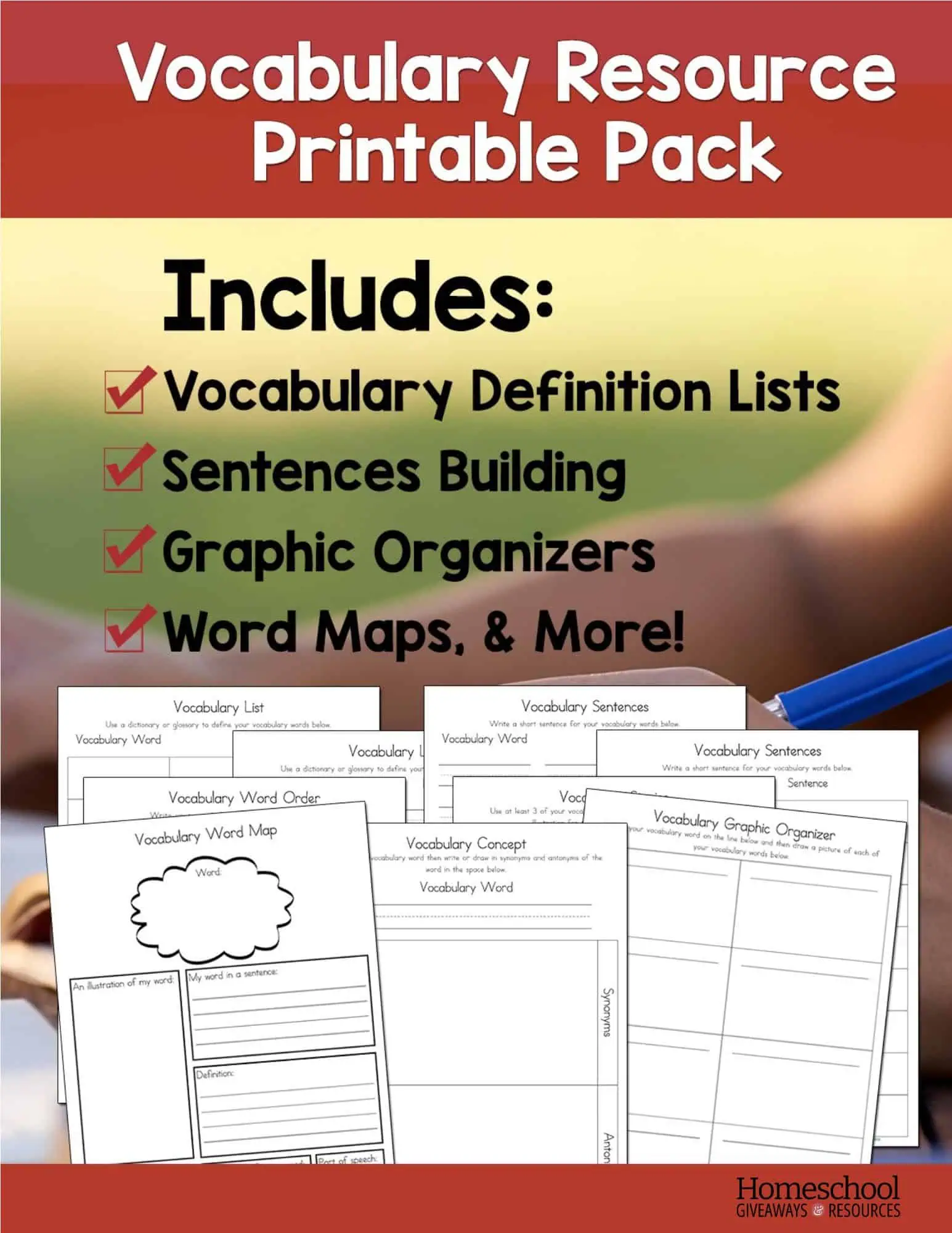
If you’re looking for a simple, no-prep way to help your kids record and explore new vocabulary words, check out our Vocabulary Resource Pack in the All-Access Library. This 11-page printable set gives students space to write definitions, sentences, antonyms, synonyms, and even short stories for each word they discover while reading. It’s a great tool for building language skills at home.
The All-Access Document Library includes over 1,400 printables in an easy-to-search database-ready to download anytime you need fresh learning resources.
18. Off
- Deactivated or not operating: The lights are off in the classroom.
- Activated or starting: The race is off to a great start!
19. Out
- Visible or exposed: The stars are out tonight.
- Hidden or extinguished: The fire is out at last.
20. Oversight
- A mistake made by neglect: Forgetting the due date was an oversight.
- Careful supervision: The new park was built under the mayor’s oversight.
21. Put out
- To extinguish: Firefighters put out the fire quickly.
- To produce or publish: The factory puts out thousands of toys each year.
22. Quantum
- A large, significant amount: Scientists made a quantum leap in technology.
- A tiny unit of measurement: A photon is a quantum of light.
23. Refrain
- To desist or hold back: Please refrain from talking during the movie.
- To repeat: The song’s chorus refrains several times throughout the tune.
24. Rent
- To purchase use temporary use of something: They rented a cabin for the weekend.
- To sell temporary use of something: The owner rented out the hall for a party.
25. Sanction
- To approve or permit: The principal sanctioned the new club.
- To punish or penalize: The team was sanctioned for breaking the rules.
26. Screen
- To show or display: The theater will screen the new movie tonight.
- To hide or protect from view: The trees screen the house from the road.
27. Seed
- To plant seeds: The farmer seeded the field before the rain.
- To remove seeds: She seeded the watermelon for the picnic.
28. Splice
- To join or connect: The sailor spliced the two ropes together.
- To separate or cut apart: The editor spliced the film to remove a scene.
29. Strike
- To hit forcefully: The hammer struck the nail.
- To miss or fail to hit: The batter struck out three times.
30. Temper
- To soften or moderate: The teacher tempered her criticism with kindness.
- To strengthen through heat or pressure: The blacksmith tempered the steel for durability.
31. Throw out
- To discard or remove: She threw out the old magazines.
- To present or add for discussion: He threw out an idea for their science project.
32. Transparent
- Obvious or easy to see: Her excitement was transparent to everyone in the room.
- Almost invisible, hard to see or see-through: The jellyfish was so transparent that you could barely notice it as it floated in the water.
33. Trim
- To decorate or add: They trimmed the Christmas tree with lights and ornaments.
- To cut or remove excess: She trimmed the edges of the photo.
34. Weather
- To withstand or endure: The cabin has weathered many storms.
- To wear down or erode: The paint on the fence has weathered in the sun.
35. Wind up
- To finish or conclude: They wound up the meeting after an hour.
- To start: He wound up the toy to make it move.
Springboard Learning Ideas
Learning contronyms can be just as fun as it is educational. Here are some hands-on ways to explore these tricky words:
- Flashcards: Grab some sheets of paper or index cards and make your own. Write the word on one side and both opposite definitions on the back. Use them to quiz each other or mix them up for a mini “matching game.”
- Illustrated dictionaries: Let kids get creative by drawing both meanings of each contronym. A picture is worth a thousand words, and it makes remembering the opposites so much easier.
- Play Charades: Act out contronyms for the group. For example, demonstrate bolt as in “run away” versus “secure” and let others guess which meaning you’re showing. This gets kids thinking about context in a playful way.
- Contronym Go Fish: Create a deck with three cards per contronym: one card with the word, and one card for each opposite meaning. Players must collect all three cards before laying down a set. This version helps kids remember both definitions while making the game a fun challenge.
- Memory Match: Create memory cards with the word and both definitions. Lay all cards face down. Players flip one card at a time, trying to match the word with both meanings. Whoever collects the most complete sets by the end wins!
- Write a Story: Encourage kids to use both meanings of a contronym in a single story.
- Contronym of the Week: Pick one contronym word each week. Add it to a notebook along with its definitions and/or images. Challenge everyone in the family to use both definitions sometime during the week. Create a “Contronym of the Week” tracker and celebrate each new word learned!
- Learn about Janus: Dive into the story of Janus, the ancient Roman god who looks in opposite directions. It’s a fun way to tie language learning to history.
By combining classic methods and hands-on games, your child will learn contronyms while having fun-and you’ll have plenty of ideas to reinforce opposite meanings throughout the school year.
Final Thought
Contronyms are a unique and playful way to explore the English language. They teach kids that such words can be used different ways and that context is everything. With these lists and activities, you can make learning vocabulary educational, interactive, and even a little magical.
You Might Also Like…
Charis King
Charis King is the owner & steward of Homeschool Giveaways, a wife whose husband lives in Heaven, and a mom of twin daughters currently attending college. She and her husband homeschooled their daughters with the belief that each person is a unique masterpiece of God – created with gifts, interests and talents. (Eph 2:10). Even though the season of homeschooling her own daughters ended a few years ago, Charis is grateful for the opportunity to support other families along their own unique homeschool journey.